
Access and reimbursement for radioligand therapy (RLT)
Understanding coverage and reimbursement for RLT is important to ensure patients have access to treatment
A majority of RLT-eligible patients are insured by Medicare and have favorable coverage1
RLT reimbursement is dependent on provider and payer negotiated rates – pricing benchmarks may differ based on2:
Wholesale Acquisition Cost (WAC)
Average Wholesale Price (AWP)
Average Sales Price (ASP)
Medicare Fee-For-Service (FFS) – CMS relies on Medicare Administrative Contractors (MAC) to process claims3
Medicare reimbursement methodologies for therapeutic radiopharmaceuticals vary depending on site of care4,5
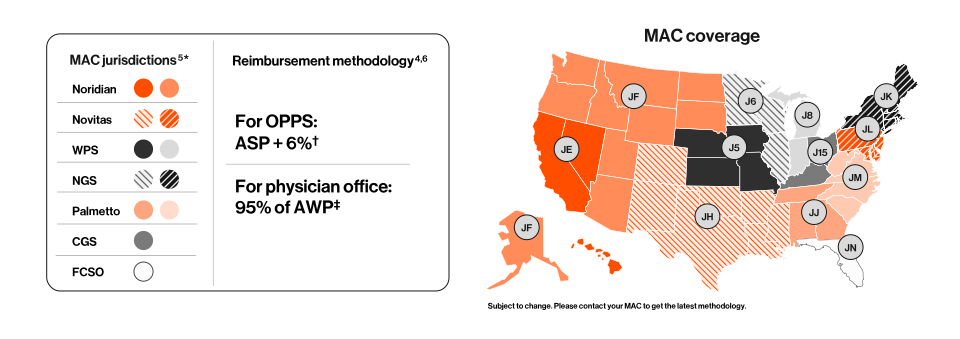
ASP, average sales price; AWP, average wholesale price; CGS, Cigna Government Services; FCSO, First Coast Service Options; MAC, Medicare administrative contractor; NGS, National Government Services; OPPS, Outpatient Prospective Payment System; WPS, Wisconsin Physicians Service Government Health Administrators.
*As of April 2026. Rates listed above do not reflect 2% reduction in Medicare payment known as sequestration.7
†OPPS reimbursement currently differs between therapeutic and diagnostic radiopharmaceuticals.8
‡For FCSO, reimbursement methodology is 92% of AWP.
Medicare Advantage plans are administered by private insurance companies (approved by Medicare). Reimbursement is determined by payer-specific contracts9
Commercial payers reimbursement is determined by payer-specific contracts
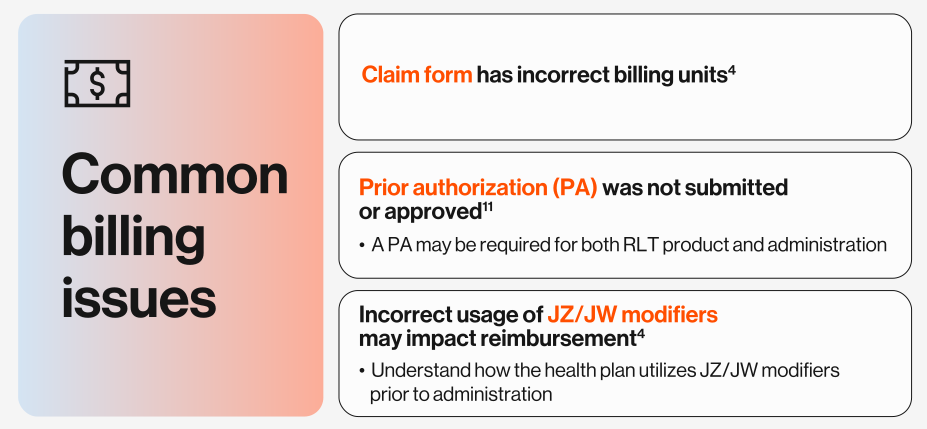
RLT is unique and there are important coding and billing considerations for therapeutic radiopharmaceuticals
RLTs are billed using A-codes, and not traditionally used J-codes10
Payers may require two separate claims, one for administration and one for the RLT treatment
JZ/JW modifiers may be required on claim forms
Common Billing Issues